Launching a gluten-free pastry shop: Anne's journey
Demand for gluten-free pastries exists, but it remains largely uncommon in traditional bakeries. Those with intolerances, celiac disease (1) , diabetes (2) , or simply consumers seeking gluten-free alternatives are looking for desserts that combine enjoyment and food safety. However, the selection remains limited: while a few isolated products can sometimes be found in traditional display cases, they are rarely made in environments completely free of wheat flour.
It was from this observation that Delienn was born, a 100% gluten-free laboratory located in Finistère, and founded by Anne Péron Tanguy. After 25 years of career in banking, she chose to change careers and put her energy into a new mission: to offer gourmet, creative, ethical gluten-free pastries adapted to health constraints.

1. From banking to pastry making: an inspiring career change
Before embarking on her gluten-free baking adventure , Anne worked for 25 years in the banking sector. An experienced manager, she developed a wide range of skills throughout her career, including project management, leadership, and training. But at 47, she felt the need to start a new professional chapter.
“ I wasn't leaving angry, nor was I burned out. It's just that today, the banking sector is a model that's still finding its way between local branches and digital banking, and it can be difficult to find your place. I enjoyed it for 25 years, I learned a lot, but I wanted to build something else .”
A skills assessment confirmed her desire for a career change. A family factor was driving her project: her daughter's gluten sensitivity . At home, Anne had gotten into the habit of adapting and inventing recipes to meet this need.
She then chose to train as a pastry chef, independently, and obtained her CAP (vocational qualification) after a year of theoretical courses, practical internships, and intensive personal study. She observed that there was a real gap in the market:
“ There are a few traditional bakeries that offer two or three gluten-free products. But they are made in environments filled with volatile flour, so they are not at all suitable for sick people .”
From this observation was born Delienn , a 100% gluten-free pastry production laboratory , designed from the outset to guarantee food safety.
2. Why create a gluten-free pastry today?

Opening a gluten-free bakery isn't just a personal choice; it's also a response to a lack of options on the market for those affected. It's estimated that between 5 and 10% of the French population is directly affected by gluten intolerance or conditions like celiac disease (of which only 10 to 20% of cases are currently diagnosed). In the northern part of the Finistère department alone, this represents approximately 35,000 people.
In addition to this, there are people with diabetes and those looking for a low glycemic index (GI) diet. Together, they form a consumer community that struggles to find suitable options.
Traditional bakeries and pastry shops sometimes offer a few gluten-free pastries . However, they are made in shared environments where wheat flour is ubiquitous. For people with celiac disease, this cross-contamination makes these products inaccessible.
“People with celiac disease don’t even go into a regular bakery. They know they won’t find anything safe there ,” explains Anne.
This observation is what motivated the creation of Delienn : a laboratory designed from the outset to guarantee an environment completely free of gluten . A unique offering in Finistère, and still rare in France.
Beyond health, gluten-free baking also responds to a fundamental trend: the search for a healthier diet. Less refined sugar, more varied and locally sourced flours, recipes adapted to specific diets… The market is expanding, and some consumers no longer want to sacrifice indulgence for the sake of health.
Anne has chosen to position herself exactly in this place: offering ethical, gourmet and creative desserts, capable of appealing to both people intolerant to gluten and those who simply want to eat better.
3. The technical challenges of gluten-free baking
Creating gluten-free pastries requires much more than simply replacing wheat flour with an alternative. Each ingredient plays a role, and each flour reacts differently depending on hydration, baking, and storage. For Anne, developing the recipes involved months of experimentation, trials, adjustments, and the search for reliable suppliers.
Finding the right flours

One of the first steps was to select safe flours , guaranteed free of traces of gluten. For this, Anne relies on suppliers certified by AFDIAG (French Association of Gluten Intolerants) who benefit from the “Crossed Ear of Wheat” label: it guarantees the total absence of gluten in the product contained therein.
To make her cakes, she uses a wide variety of flours:
-
sorghum , a cereal of the future cultivated in France, is inexpensive and requires little water, and often serves as its base
-
buckwheat , emblematic of Brittany,
-
flours with more flavor, such as chestnut or almond flour
-
or even rice or corn flour.
Each recipe often combines several flours to find the right balance between texture, flexibility, and flavor.
Reinventing sugar
Another challenge Anne has taken on is managing sugar. Her goal: to reduce sugar addiction and offer desserts adapted to... Low GI pastries , suitable for diabetics.
Anne prefers unrefined sugars such as coconut blossom sugar, agave syrup, honey, or grape sugar. Their significantly higher sweetening power allows for a substantial reduction in quantity, while also revealing other flavors.
“ My pastries are 20 to 30% less sweet than a traditional product, so that the aromas of the fruit, cocoa or vanilla can really express themselves ,” she explains.
Textures that are difficult to master
Some preparations, such as leavened doughs (like brioche) or puff pastry, cannot be recreated exactly without gluten . As for choux pastry, it took many trials before he found the right formula.
“ With traditional choux pastry, there are few surprises: the recipe almost always works. With gluten-free flours, each mixture needs a different hydration, and you have to find the right balance each time .”
For some recipes that were complex to adapt, Anne chose to favor other gourmet creations rather than deliver disappointing versions.
Test, adjust, secure
Beyond taste, each product must also be stable over time. Shelf life and texture tests are essential to ensure that the pastries last until they are eaten.
Demanding and slower to develop, gluten-free baking requires experimentation and questioning oneself with each recipe. But that's also what makes it a fantastic field for creativity.
4. A gourmet and innovative offering
Anne's mission is clear: to prove that gluten-free pastries can be just as delicious and refined as traditional ones. For her launch, she has created a deliberately limited yet cohesive menu, perfectly aligned with her values and intentions.
A short but creative card
The Delienn laboratory offers a selection of 6 core recipes : 5 seasonal creations and a "selection of the moment" inspired by seasonal fruits or major calendar occasions (Christmas, Mother's Day, Father's Day, Easter, etc.). Thus, those with a sweet tooth can enjoy a mirabelle plum tart at the end of summer, a modern twist on the galette des rois in January, or gluten-free yule logs at Christmas.
Elaborate desserts

Among her recipes, for example, for this autumn:
-
The Autumn Delienn , a dessert with seasonal flavors and a chestnut cream and vanilla insert
ℹ️ See photo above: assembly made in the small round entremets mold with rounded edges, Ø 200 H45 -
A chocolate dessert , designed for cocoa lovers.
-
The “Sarah’zine” tart , a tribute to Breton buckwheat and a nod to his daughter Sarah’s name, is composed of a buckwheat shortbread, a caramelized tatin pastry, and vanilla syrup.
-
A gluten-free, reimagined Paris-Brest pastry .
-
a pistachio and orange blossom tart
Each dessert incorporates a variety of alternative flours and low GI sugars.
“ Delienn means "leaf" in Breton: lightness, respect for nature and the seasons... that's the program I propose .”

Macarons suitable for diabetics
Anne has also chosen to offer a range of gluten-free macarons , made entirely from scratch (shells and ganaches). The aim is to reduce the glycemic impact without compromising the deliciousness.
“ A macaron remains a sweet product, but by working on the balance between the shell and the ganache, we can obtain a version more acceptable for a diabetic ,” she points out.
5. A well-developed business model
Beyond recipes, succeeding in gluten-free pastry making involves finding a viable model, capable of absorbing the high cost of raw materials and catering to a niche clientele.
Anne chose a pragmatic and sustainable approach, adapted to her objective: to practice with pleasure and stability, without aiming for excessive growth.
His experience in the banking sector was decisive and allowed him to approach the entire project thoughtfully “ after filling out numerous Excel spreadsheets ”.

A pastry shop on a human scale
Anne works alone and has no plans to hire employees. Her deliberately limited menu ensures consistency in her creations and adherence to a set of specifications she controls from start to finish. No overproduction, no out-of-season products, “no red berries in the Christmas logs,” but a clear and appealing offering that can attract both those concerned about gluten and curious food lovers.
A home laboratory
Rather than opening a physical store, she chose to invest in creating a professional laboratory directly adjacent to her home. This decision significantly reduces fixed costs and has less impact on her production costs; it also simplifies logistics, while guaranteeing a controlled and secure environment free from gluten contamination.
Online sales and collection points
The model is based on an online store , with remote ordering and payment.
Customers can then collect their cakes either directly from the laboratory, or from partner businesses selected for their values (greengrocers, organic stores, short supply chains, producers' stores) and their geographical location , i.e. a large part of the North of the Finistère department.
This strategy makes it possible to reach a wider customer base than just a neighborhood, which is essential in a market where only 5 to 10% of consumers are directly involved.
Rigorously selected suppliers
To guarantee food safety and quality, Anne collaborates with specialized and certified suppliers, such as Alisa Bio for AFDIAG-approved flours. Sugars (raisin, coconut, agave) come from organic wholesalers, and fresh products (milk, eggs, fruit) are purchased primarily from local producers, preferably through direct sales or short supply chains. She prioritizes organic products but may also source some items from supermarkets.
“ As far as possible, my purchases are thoughtful. I'm not going to buy organic products from the other side of the world. But for example, I would have a hard time growing cocoa in my garden, so I favour fair trade sources and producers who respect both the land and the people .”
This demanding approach limits room for maneuver on prices, but it strengthens credibility and customer trust.
Cost reduction and the fight against waste
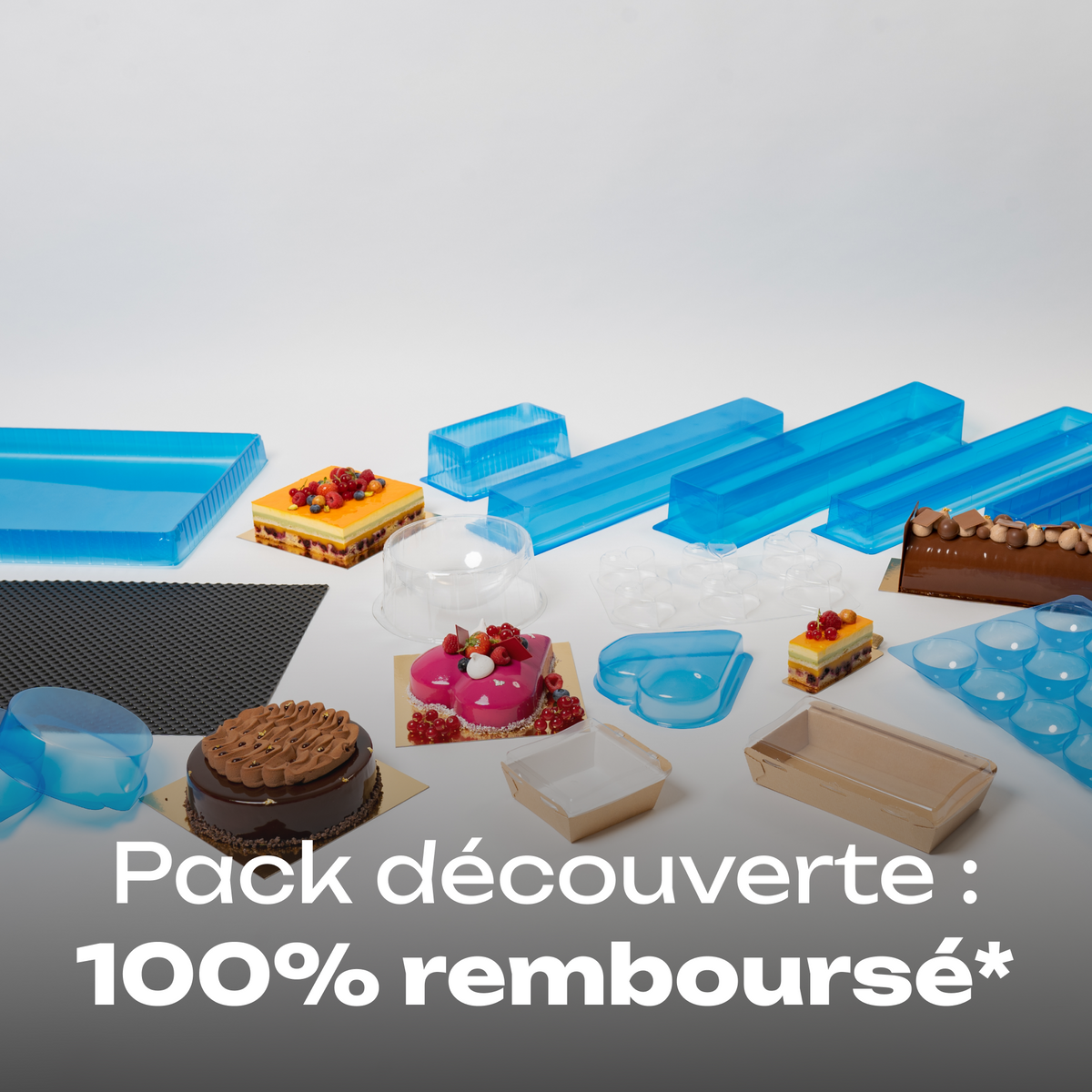
Another major lever for optimization is the use of suitable equipment. Anne, for example, chose PETIT molds to assemble her entremets and inserts:
“ During my internship, I noticed that round inserts were being prepared on a rectangular tray, which means throwing away half the material after cutting. With suitable insert molds, I use exactly the right amount to make my entremets, without any waste .”
This logic, applied to both ingredients and production, allows it to limit waste and better control its costs, despite more expensive raw materials.
6. Safety, hygiene and credibility
In a gluten-free bakery , trust rests first and foremost on the guarantee of the total absence of cross-contamination . This is a crucial health issue: for people with celiac disease, even a trace of flour can cause serious reactions (1) .

A 100% gluten-free environment
Anne made the radical choice to work exclusively in a laboratory where not a single gram of wheat or any other gluten-containing grain ever enters . This requirement ensures maximum safety for her clients.
“ I don’t need to fight against traces of gluten: there simply aren’t any in my workshop ,” she explains.
Compliance with hygiene standards
Like any food company, Delienn is subject to health regulations and adheres to the HACCP method. Inspections by authorities, traceability of raw materials, and storage regulations are integral parts of the laboratory's daily operations.
Labels and certifications: between constraints and credibility
While AFDIAG issues a recognized label for certified products, Anne has chosen not to pursue this process for the time being. Each certification requires validation of each recipe individually, which would stifle creativity and the ability to refresh her menu.
However, in the medium term, it plans to implement independent controls of its laboratory in order to guarantee the absence of gluten and strengthen the confidence of its customers.
Transparency as a key value
In the meantime, its approach is based on complete transparency: clear communication about ingredients, choice of certified suppliers, and direct communication with customers. This honesty helps to establish a relationship of trust, essential in this sensitive sector.
A project that immediately garnered support
Every time Anne or those around her talk about her business and her project, she observes the same phenomenon: her listeners are immediately enthusiastic about the idea. Whether they are family, friends, partner businesses, or even healthcare professionals, they all find a personal connection to this initiative.
“ Every time, someone tells us: my sister is intolerant, my neighbor is diabetic, or I myself have to follow a gluten-free diet .”
This spontaneous reaction illustrates the reality: 5 to 10% of the French population is directly affected by gluten or blood sugar management. The Delienn project therefore resonates immediately, as it addresses a concrete and widely shared need.
Thus, by combining a creative offering, certified ingredients, a thoughtful economic model and a committed approach, Anne provides an answer awaited by many consumers: desserts that are both delicious, safe and respectful of health.
Although this market remains a niche sector of traditional pastry , it meets the needs of health-conscious consumers by providing an offering adapted to their medical condition or desires.
Let's hope Anne succeeds in her endeavor and attracts new partners near her home to promote her offerings and delight Breton food lovers ;) ! We wish her great success and continued enjoyment in this new venture.
Many thanks to Anne for our exchange!
To stay up-to-date with Delienn's news:
Visit https://delienn.com/ or follow us on social media:
LEARN MORE(1) Food safety: the importance of “zero gluten” for those with intolerances and celiac diseaseIn a person with celiac disease , gluten triggers an autoimmune reaction that progressively destroys the villi of the small intestine. These structures are essential for nutrient absorption. According to the French Association of Gluten Intolerants (AFDIAG) , even a tiny amount of contamination can be enough: 10 mg of gluten per day — the equivalent of a few breadcrumbs — can trigger an inflammatory reaction and damage the intestinal lining (AFDIAG). The consequences are numerous:
These symptoms can appear immediately after ingestion or remain asymptomatic while damaging the intestinal lining. This is why, for people with celiac disease, the only effective therapy remains a strictly gluten-free diet , without the risk of cross-contamination. (2) Why a low GI diet is essential for diabeticsFor people with diabetes, the challenge is not gluten but managing sugar and its impact on blood glucose levels . Every food has a glycemic index (GI) , which measures its ability to rapidly raise blood sugar levels. High-glycemic index (GI) foods (white bread, refined sugar, classic pastries) cause a rapid spike in blood sugar , followed by a sharp drop, which puts a strain on the body and complicates diabetes management. Conversely, low-GI foods release sugar gradually, limiting blood sugar spikes and helping to stabilize blood glucose levels (Inserm, Diabetes France). Adapting baking to a low GI diet involves:
The benefits are clear: fewer sudden fluctuations in blood sugar, better satiety and prevention of long-term complications related to diabetes (neuropathies, cardiovascular diseases). By incorporating these principles, low GI pastry allows diabetics to rediscover the pleasure of dessert, without endangering their health. |